Stories from local teams implementing 100-Day Challenges

Impact Stories

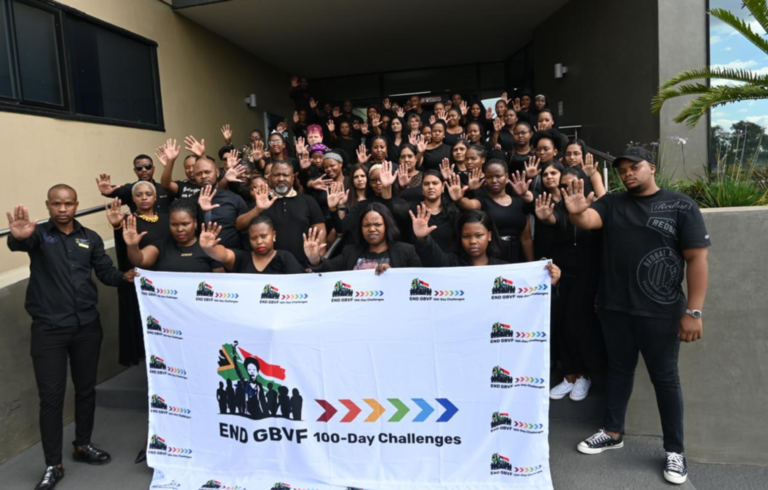
Ending GBVF

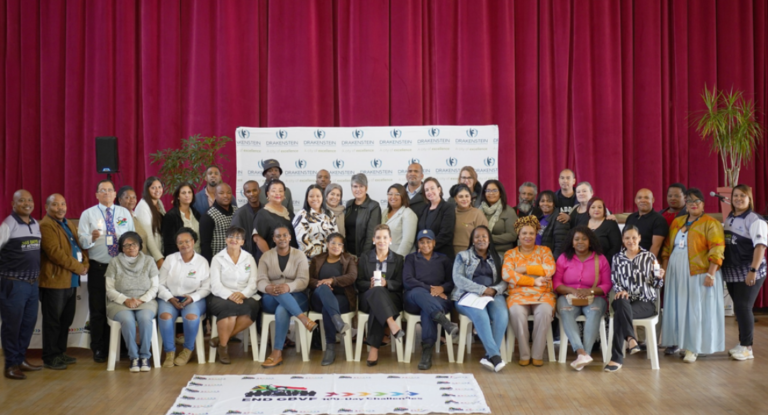
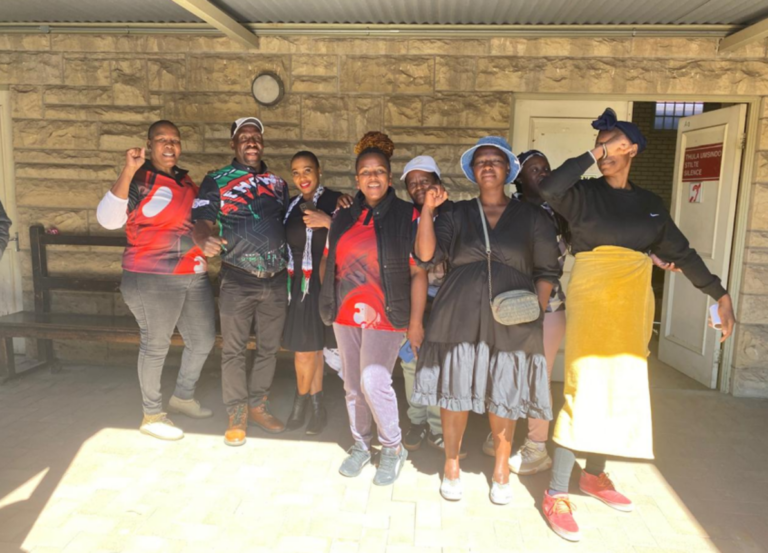
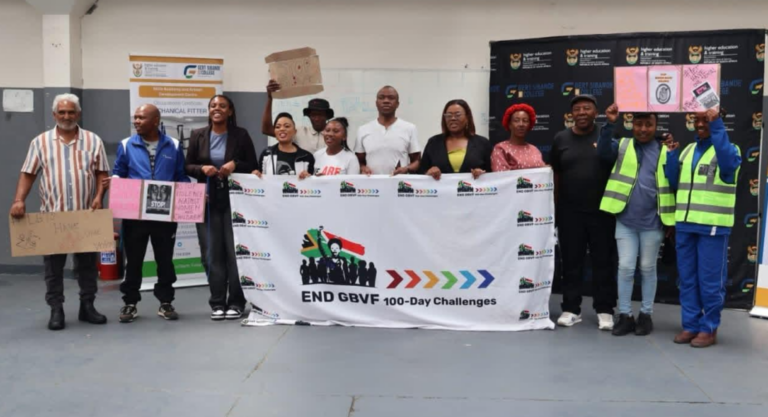
Drakenstein Municipality: a permanent GBVF hub, built in 100 days

A survivor in Drakenstein could know that help existed somewhere and still not know where the referral pathway started. The people most likely to notice early signs, ECD teachers who see children every day, had no training in what to do about it. Men were largely absent from the conversation. And a mother seeking counselling had nowhere to put her children while she did it.
Read More »
Ending GBVF

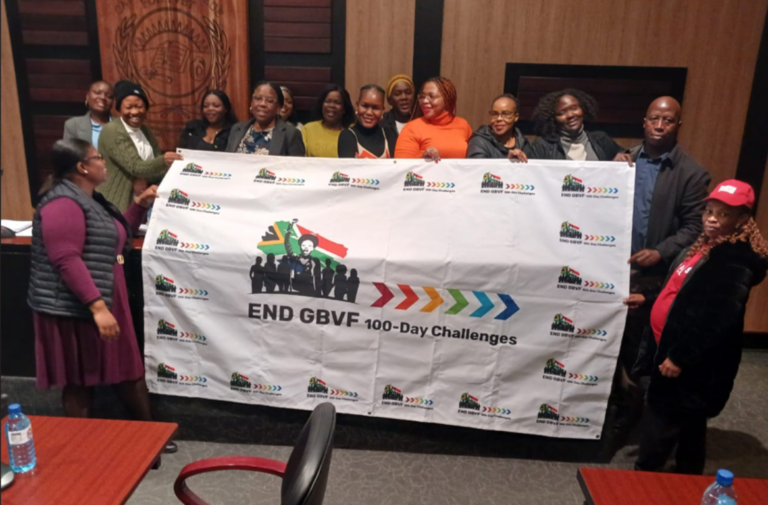
Gert Sibande District: monthly counselling reach lifted from 3 survivors to 18

A survivor who reports and receives no counselling is a survivor left to carry it alone. In Msukaligwa Municipality, the Department of Social Development was reaching three victims/survivors a month through counselling. The services existed. The Victim Empowerment Programme facilities and shelters were there. What was missing was the flow of people into them, which depends entirely on whether anyone in the community knows the services exist and how to reach them.

Read More »
Ending GBVF

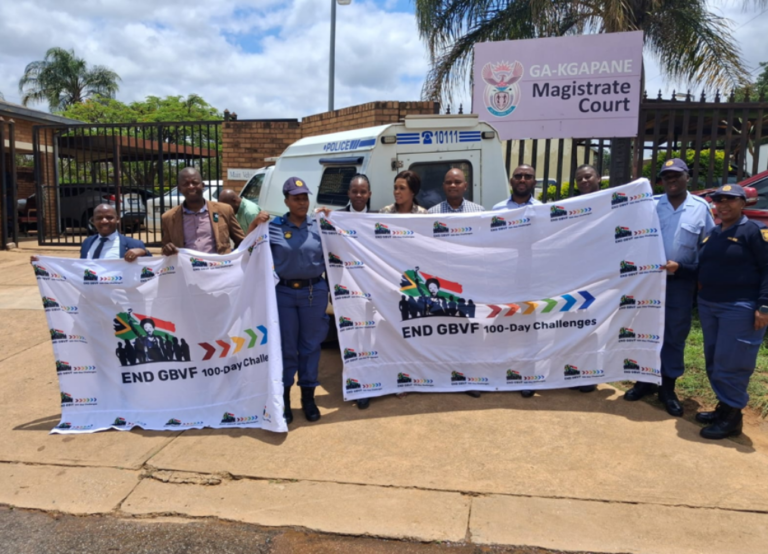
Ga-Kgapane Magistrate’s Court: 56 backlogged domestic violence cases cleared in 100 days

A domestic violence matter that drags past three months stops being a legal process and becomes a second ordeal. At Ga-Kgapane, 56 cases sat in backlog, and the two things holding them there were both outside the court’s direct control: incomplete returns of service from SAPS, and applicants who could not give an accurate address for the respondent. A file cannot move if nobody can be found to serve.

Read More »
Ending GBVF

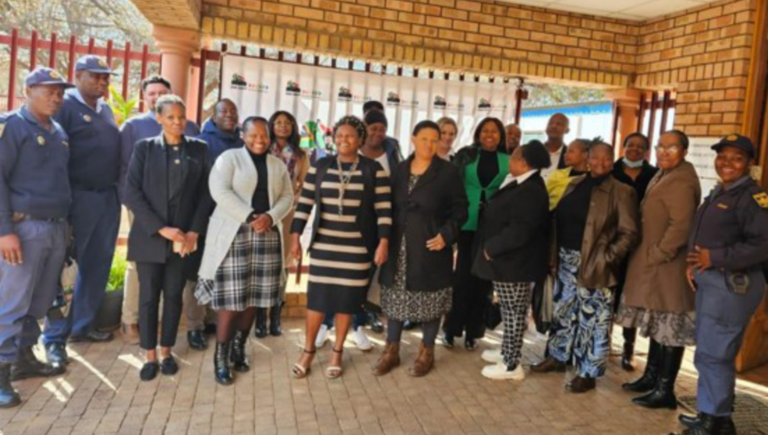
Lephalale Magistrate’s Court: divorce backlog cut by 76% in 100 days

A backlog is not an administrative figure. For a woman waiting on a maintenance order, it is months without the money that feeds her children. For a survivor waiting on a sexual offence matter, it is months of living alongside an unresolved case. Lephalale carried backlogs across four case types at once, and the turnaround times on the two most urgent categories sat at a month.

Read More »
Ending GBVF

Thohoyandou Magistrate’s Court: 910 domestic matters finalised in 100 days

The Thohoyandou Magistrate’s Court serves communities across deep rural Vhembe. For a survivor who has applied for a protection order, distance and the cost of data decide whether she can follow her matter through to the end. Every case that carries over to the next term is a person still waiting. New domestic matters arrive faster than most courts can close old ones.

Read More »
Local Service Delivery

Government service delivery: UAE Government Accelerators, 2016 to 2017

Governments are rarely short of plans. What they lack is a way to move from the plan to the street inside a timeframe the public can feel. The UAE Prime Minister’s Office set out to close that gap through its Government Accelerators, running 100-Day Challenges with support from the Rapid Results Institute. Two of the results speak directly to service delivery, and both turned on the same idea: hand a frontline team a hard goal and the authority to reach it, then get out of its way.

Read More »
Local Service Delivery

Cleveland, Ohio: 105 young people housed in 100 days

Cuyahoga County was producing homelessness at a predictable rate and then treating it as a surprise. Young people aged out of foster care each year and a substantial share of them landed in shelters or on the street within a few years. The county knew this was happening. What it did not have was a way to see who those young people were, one by one, in time to do anything about it.

Read More »
Environment

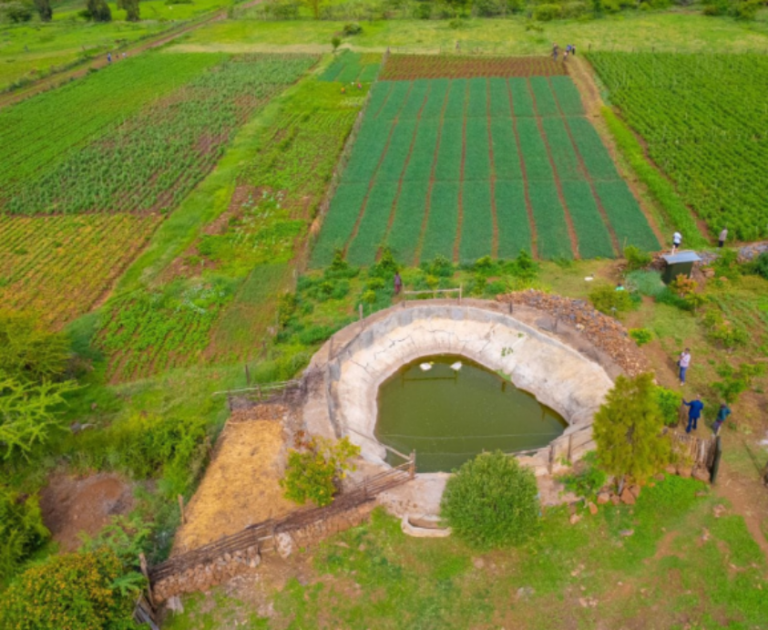
Kenya’s Ministry of Water and Irrigation: nineteen 100-day projects to make a new water law work

Kenya passed a water law in 2002 requiring the creation of independent water boards, semi-autonomous bodies to manage water delivery. The ministry did not know how to implement it. The budget year made that worse. Between plan-writing from June, a budget arriving in September, December closed, revisions in January and a midterm review in February, a Kenyan ministry had roughly a hundred working days in any year to actually implement anything.

Read More »
Community Development

Kenya National Food Fortification Alliance: three fortified cooking oil brands on shelves in 100 days

Food fortification is cheap and the health case is settled. Getting it to happen is the hard part. In Kenya, years of meetings and workshops on fortification had produced action plans and calls for more meetings, and little else. Stakeholders were drifting away. Fortifying salt with iodine in the 1990s had taken more than two years, so the idea that anything could move faster was not widely believed.

Read More »
Community Development

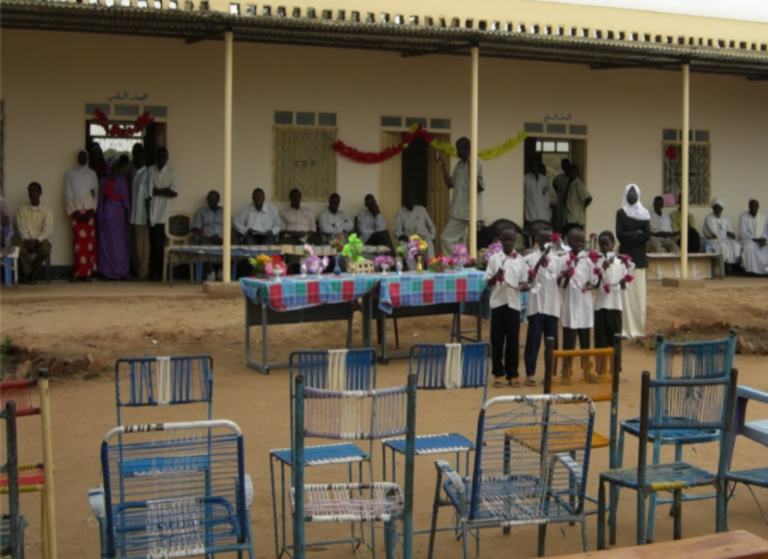
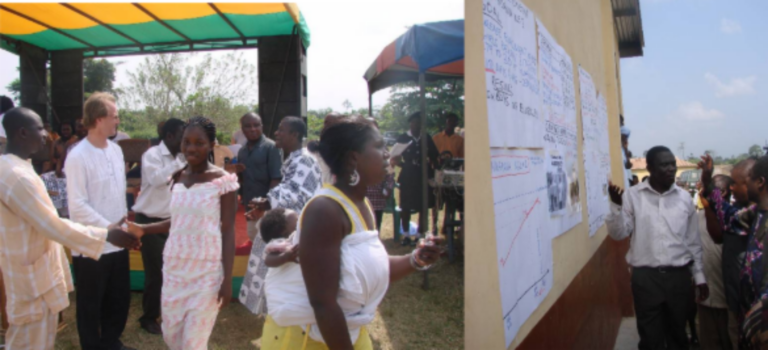
Community-Based Rural Development, Ghana: a classroom block at half the cost, and absenteeism cut from 49% to 16%

Rural development in Ghana ran through large contractors and district assemblies, and it was slow and expensive. In one district, a three-unit classroom block stood unfinished four years after construction began. A few feet away, in 2006, a Rapid Results team would build an identical block in 95 days. The prevailing belief, the hardest thing the initiative had to overcome, was that communities did not have the capacity to do this themselves. As Assin South’s District Chief Executive admitted, when he first heard 100 days it sounded funny and he thought it could not work.

Read More »
Community Development

Nicaragua’s agricultural sector: three of five 100-day teams hit their goals, and grade A milk tripled

Norman Piccioni’s agricultural technology project had run for fourteen years, funded by the World Bank, DFID and the Swiss Development Agency, and was stuck in the usual way: institutions that would not integrate their work, and a national habit of funding agricultural research rather than getting existing technology into farmers’ hands. When the Rapid Results approach was pitched, the counterparts were openly sceptical, one saying they had already done every rapid result imaginable.

Read More »
100 Days of Action. A Lifetime of Change.

This information is confidential and proprietary to The World of Impact (Pty) Ltd. © 2026 The World of Impact (Pty) Ltd. All rights reserved. Trademarks are owned by or licensed to The World of Impact (Pty) Ltd. Read our full disclaimer and privacy policy.

Thought starter reflection questions

Jot down thoughts on these questions – to the extent they are relevant to your experience at the session:
  • When did the mood in the event shift from “why are we here?” to “this could be interesting – I am excited to be part of this.” What triggered this shift? 
  • When did you have to go “off script” on the agenda or to change the agenda? What triggered this? What did you adjust? How did it go?
  • What was most surprising to you at the event?
  • What new insights did you gain about the issue at hand, and about the way leaders in the system interacted with each other?
  • Where did the conversation get stuck? What got it unstuck?
  • How would you characterise the level of trust among participants in the meeting? To what extent did this shift as the meeting progressed? To what do you attribute this shift, if indeed it happened?

Thought starter...

Reflection Questions 

Jot down thoughts on these questions – to the extent they are relevant to your experience at the session:

  • When did the mood in the event shift from “why are we here?” to “this could be interesting – I am excited to be part of this.” What triggered this shift? 
  • When did you have to go “off script” on the agenda or to change the agenda? What triggered this? What did you adjust? How did it go?
  • What was most surprising to you at the event?
  • What new insights did you gain about the issue at hand, and about the way leaders in the system interacted with each other?
  • Where did the conversation get stuck? What got it unstuck?
These are 100-Day Challenge Mentors. 

They did some work before you received the Challenge Note. This included:

  • Writing the Challenge Note, and making sure that the leaders of all the organisations represented on the team are comfortable with it – and committed to supporting the work of the team
  • Helping the leaders of these organisation recruit you and your colleagues to the team
  • Gathering some baseline data and other information that will help you and your teammates set your 100-Day goal and develop your plan.
  • Making sure all the preparations are made for a successful Lift-Off workshop, when you and your teammates will meet and get your 100-Day Challenge started. This includes venue, facilitation support, food, swags, comms, travel arrangements and whatever else is needed.


Mentors will participate in all or part of the Lift-Off Workshop, mostly at the start to provide context and answer questions, and at the end to give you and your teammates feedback about the goal and plan you develop.

During the 100 days following the Lift-Off Workshop, here’s what the Mentors will do:  

  • They will check in every two weeks with the team leaders to see how the team is doing and what support they and the team need.
  • They will keep other organisational leaders informed and engaged during the 100 days, and pull them in to help as needed.
  • They will participate in the last part of the Refuelling Workshop, halfway through the 100 days, to see what additional support the team needs, and to begin to plan with the team for sustainability and scale-up.
  • They will work with the team at the Sustainability Workshop to finalise recommendations on sustaining the results and building on the work of the team.