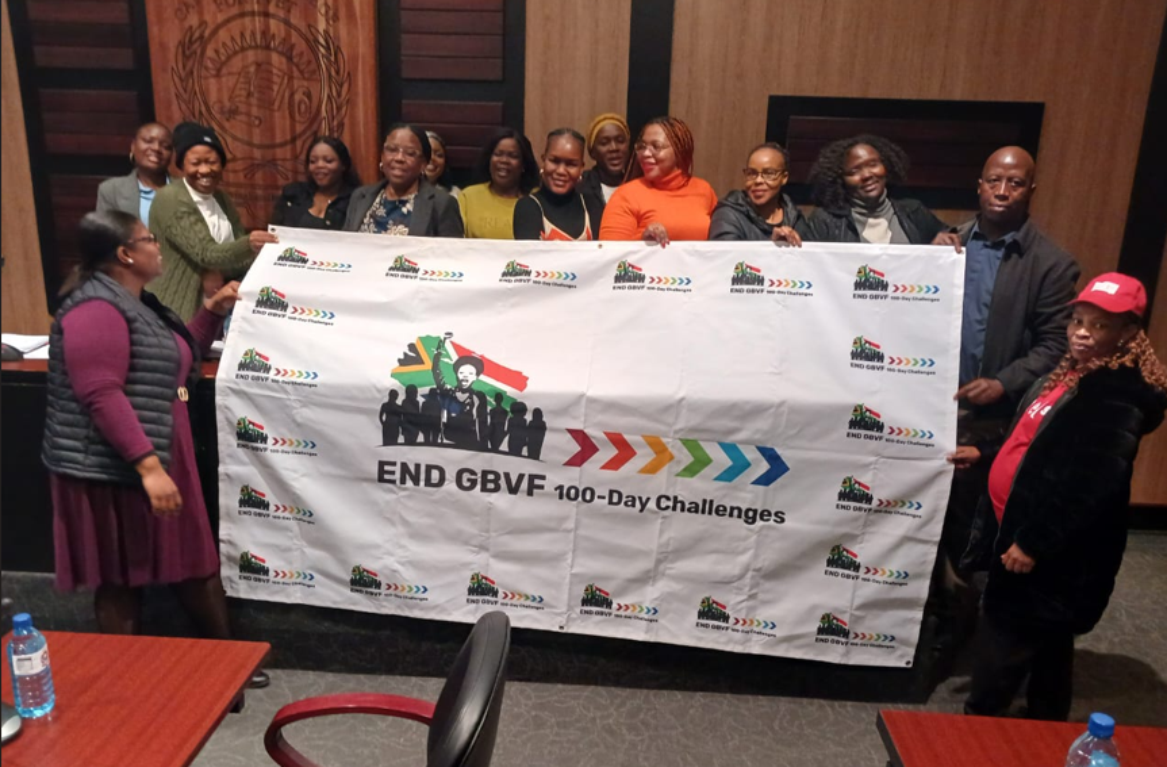
Capricorn District Municipality: women-owned businesses take 75% of municipal contracts
Chris
Economic dependence is one of the reasons a woman stays. Pillar 5 of the NSP-GBVF names this directly, but a ring-fenced procurement target on paper does not put money in anyone's hands. In Capricorn, women-owned businesses held 31% of the municipal supply chain. The businesses existed. The route from a street corner in Polokwane to an official purchase order did not.
The 100-Day goal
Raise the share of municipal contracts held by women-owned businesses from 31% to 69%.
The Results
Women-owned businesses took 75% of municipal contracts. Of 52 companies contracted between July and October, 39 were women-owned.
1,200 women were reached through outreach. 60 were trained. All 60 were linked to funding or supply chain opportunities.
One of them had been selling pap and porridge on the streets of Polokwane. She was hired to cater a two-day workshop, and that visibility earned her a five-day catering contract and the first substantial revenue her business had seen.
Who did the work
A cross-departmental municipal team spanning local economic development, supply chain management and social development, working with government departments and civil society organisations in the district.
How they did it
The team split the 100 days into three moves rather than running everything at once.
Days 1 to 50 were spent in communities, registering women-led companies, non-profits and income-generating projects. No training, no procurement, just finding who was actually out there.
Days 51 to 70 narrowed to 60 women and gave them what the supply chain requires: SMME compliance, consumer education, tax filing, tendering skills and enterprise development. They were also registered on the W&RSETA database, which opens access to 12-month service provider contracts.
Days 71 to 100 were spent linking. The team treated a completed training course as a halfway point, not an outcome, and did not stop until every woman trained had an opportunity in front of her.
Resistance inside the team, funding limits and resource shortages were real. Weekly meetings with clearly delegated responsibilities are what kept the phases moving on schedule.
What continues
The team is consolidating an annual plan aligned to Pillar 5, which moves this from a sprint into the municipality’s standing work. The partnerships with departments and civil society organisations that supplied the training and the contracts remain in place.
Share the Post:
Thought starter reflection questions
Jot down thoughts on these questions – to the extent they are relevant to your experience at the session:
When did the mood in the event shift from “why are we here?” to “this could be interesting – I am excited to be part of this.” What triggered this shift?
When did you have to go “off script” on the agenda or to change the agenda? What triggered this? What did you adjust? How did it go?
What was most surprising to you at the event?
What new insights did you gain about the issue at hand, and about the way leaders in the system interacted with each other?
Where did the conversation get stuck? What got it unstuck?
How would you characterise the level of trust among participants in the meeting? To what extent did this shift as the meeting progressed? To what do you attribute this shift, if indeed it happened?
Thought starter...
Reflection Questions
Jot down thoughts on these questions – to the extent they are relevant to your experience at the session:
When did the mood in the event shift from “why are we here?” to “this could be interesting – I am excited to be part of this.” What triggered this shift?
When did you have to go “off script” on the agenda or to change the agenda? What triggered this? What did you adjust? How did it go?
What was most surprising to you at the event?
What new insights did you gain about the issue at hand, and about the way leaders in the system interacted with each other?
Where did the conversation get stuck? What got it unstuck?
These are 100-Day Challenge Mentors.
They did some work before you received the Challenge Note. This included:
Writing the Challenge Note, and making sure that the leaders of all the organisations represented on the team are comfortable with it – and committed to supporting the work of the team
Helping the leaders of these organisation recruit you and your colleagues to the team
Gathering some baseline data and other information that will help you and your teammates set your 100-Day goal and develop your plan.
Making sure all the preparations are made for a successful Lift-Off workshop, when you and your teammates will meet and get your 100-Day Challenge started. This includes venue, facilitation support, food, swags, comms, travel arrangements and whatever else is needed.
Mentors will participate in all or part of the Lift-Off Workshop, mostly at the start to provide context and answer questions, and at the end to give you and your teammates feedback about the goal and plan you develop.
During the 100 days following the Lift-Off Workshop, here’s what the Mentors will do:
They will check in every two weeks with the team leaders to see how the team is doing and what support they and the team need.
They will keep other organisational leaders informed and engaged during the 100 days, and pull them in to help as needed.
They will participate in the last part of the Refuelling Workshop, halfway through the 100 days, to see what additional support the team needs, and to begin to plan with the team for sustainability and scale-up.
They will work with the team at the Sustainability Workshop to finalise recommendations on sustaining the results and building on the work of the team.