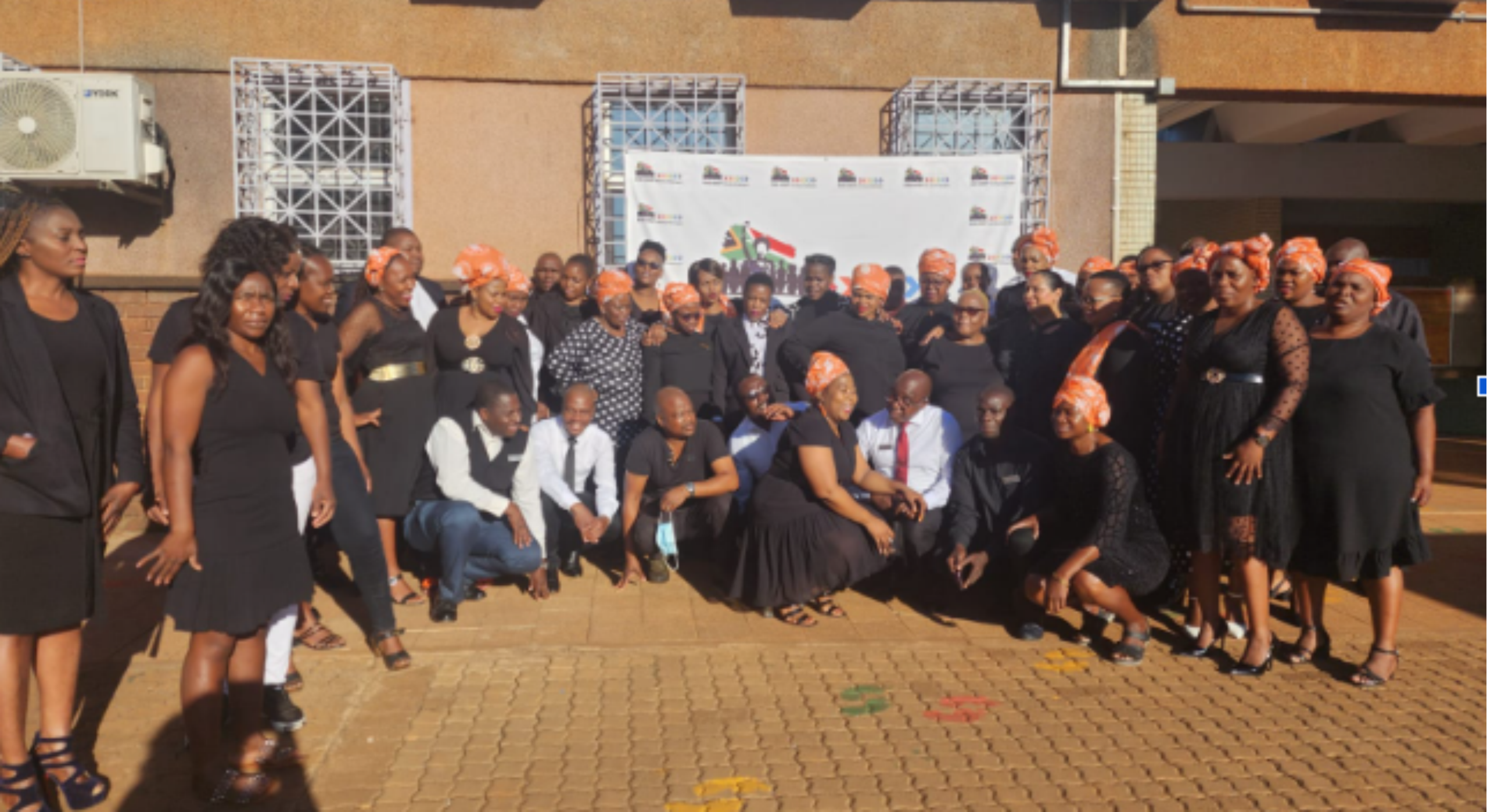
Thohoyandou Magistrate’s Court: 910 domestic matters finalised in 100 days

The Thohoyandou Magistrate's Court serves communities across deep rural Vhembe. For a survivor who has applied for a protection order, distance and the cost of data decide whether she can follow her matter through to the end. Every case that carries over to the next term is a person still waiting. New domestic matters arrive faster than most courts can close old ones.


The 100-Day goal

The court’s domestic team set one goal: finalise 80% of their domestic matters inside 100 days. Not more hearings scheduled, not more files opened. Matters closed, and survivors given an outcome.

The results

The team finalised 910 cases in 100 days, passing the goal they set.

They did it while 877 new matters were registered against them, an average of 58 new cases every week. Finalisations outpaced new registrations across the full period. The backlog did not simply move sideways while the team worked on something else. It shrank while the inflow continued.

Who did the work

This was the court’s own domestic section, the people who handle these files daily, working alongside the presiding magistrate rather than reporting up to a project office. No new posts were created and no new budget was allocated.

How they did it

The biggest single blockage was the absent applicant. A matter where the applicant does not appear stalls, then stalls again, then ages out. The team stopped treating an absence as the end of the road. They allocated staff time to trace the applicant, open a line of communication, establish where she was and why she had not come, and put that information in front of the magistrate so the matter could proceed on the facts instead of waiting.

Virtual hearings were tested and did not carry the weight the team hoped for. Clients in the rural parts of the district could not reliably get online or afford the data. The team learned early that the technology fix was not going to be the answer here, and put their energy into the tracing work instead.

What continues

The team has committed to running a second 100-Day Challenge and is now setting a sustainability target to hold the finalisation rate rather than let it fall back once the sprint ends. The tracing practice for absent applicants stays in place, because it was built by the clerks and officers who use it, not handed to them.

Share the Post:

Thought starter reflection questions

Jot down thoughts on these questions – to the extent they are relevant to your experience at the session:
  • When did the mood in the event shift from “why are we here?” to “this could be interesting – I am excited to be part of this.” What triggered this shift? 
  • When did you have to go “off script” on the agenda or to change the agenda? What triggered this? What did you adjust? How did it go?
  • What was most surprising to you at the event?
  • What new insights did you gain about the issue at hand, and about the way leaders in the system interacted with each other?
  • Where did the conversation get stuck? What got it unstuck?
  • How would you characterise the level of trust among participants in the meeting? To what extent did this shift as the meeting progressed? To what do you attribute this shift, if indeed it happened?

Thought starter...

Reflection Questions 

Jot down thoughts on these questions – to the extent they are relevant to your experience at the session:

  • When did the mood in the event shift from “why are we here?” to “this could be interesting – I am excited to be part of this.” What triggered this shift? 
  • When did you have to go “off script” on the agenda or to change the agenda? What triggered this? What did you adjust? How did it go?
  • What was most surprising to you at the event?
  • What new insights did you gain about the issue at hand, and about the way leaders in the system interacted with each other?
  • Where did the conversation get stuck? What got it unstuck?
These are 100-Day Challenge Mentors. 

They did some work before you received the Challenge Note. This included:

  • Writing the Challenge Note, and making sure that the leaders of all the organisations represented on the team are comfortable with it – and committed to supporting the work of the team
  • Helping the leaders of these organisation recruit you and your colleagues to the team
  • Gathering some baseline data and other information that will help you and your teammates set your 100-Day goal and develop your plan.
  • Making sure all the preparations are made for a successful Lift-Off workshop, when you and your teammates will meet and get your 100-Day Challenge started. This includes venue, facilitation support, food, swags, comms, travel arrangements and whatever else is needed.


Mentors will participate in all or part of the Lift-Off Workshop, mostly at the start to provide context and answer questions, and at the end to give you and your teammates feedback about the goal and plan you develop.

During the 100 days following the Lift-Off Workshop, here’s what the Mentors will do:  

  • They will check in every two weeks with the team leaders to see how the team is doing and what support they and the team need.
  • They will keep other organisational leaders informed and engaged during the 100 days, and pull them in to help as needed.
  • They will participate in the last part of the Refuelling Workshop, halfway through the 100 days, to see what additional support the team needs, and to begin to plan with the team for sustainability and scale-up.
  • They will work with the team at the Sustainability Workshop to finalise recommendations on sustaining the results and building on the work of the team.