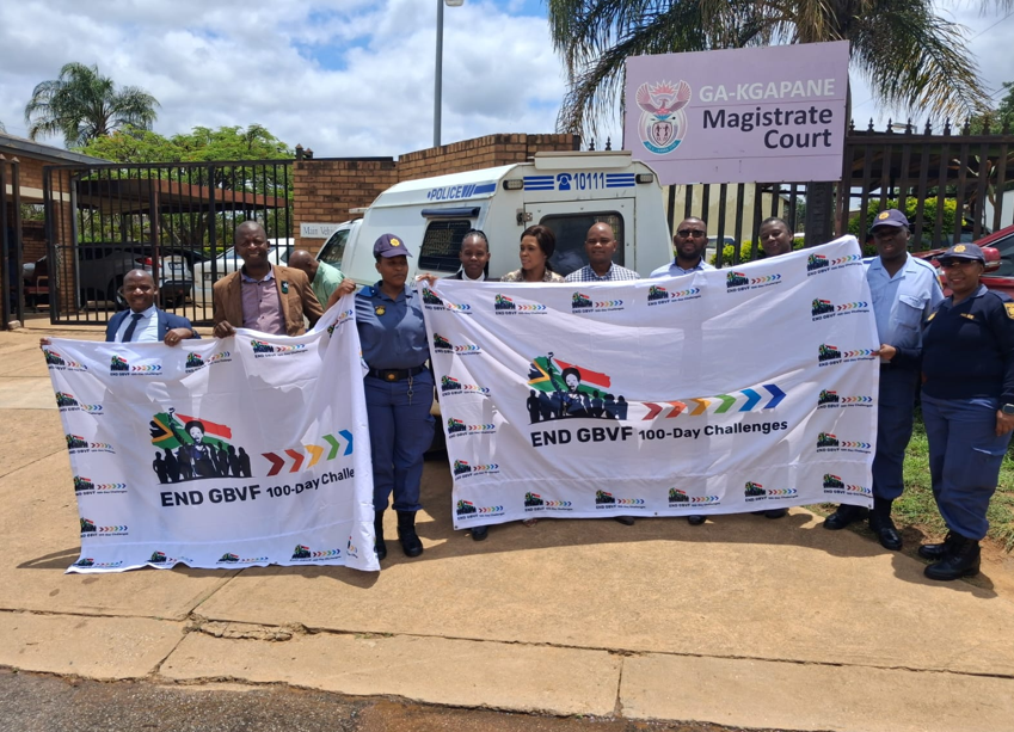
The 100-Day goal
Bring the average finalisation time for domestic violence matters below 90 days.
The results
All 56 backlogged cases were resolved inside the 100 days.
Who did the work
The court’s domestic violence team, working alongside SAPS, the judiciary and the stakeholders who sit in the Court and Case Flow Meetings.
How they did it
The team started with the return of service, because that was the choke point. They made the working relationship with SAPS an explicit objective rather than an assumption, and when incomplete returns kept arriving they took the problem into Court and Case Flow Meetings instead of absorbing it quietly. Naming the blockage in a forum where everyone was present is what shifted it.
They then set a target close date for every domestic violence matter and told every stakeholder what it was. A shared deadline is harder to let slip than an internal one.
The judiciary backed this by issuing firm return dates rather than open ones, which removed the drift that lets a matter reappear months later.
On the address problem, the team stopped treating incorrect details as the applicant’s error and started treating it as an information gap they were responsible for closing, explaining at the point of application why the address decides whether the case moves.
Weekly team meetings held it together, with tasks delegated and progress checked rather than assumed.
What continues
The relationships built with SAPS and the judiciary outlast the sprint and are the harder thing to replace. Firm return dates and target close dates are now practice. The team also reports positive community response at outreach events, which matters for a court that depends on people coming forward in the first place.