

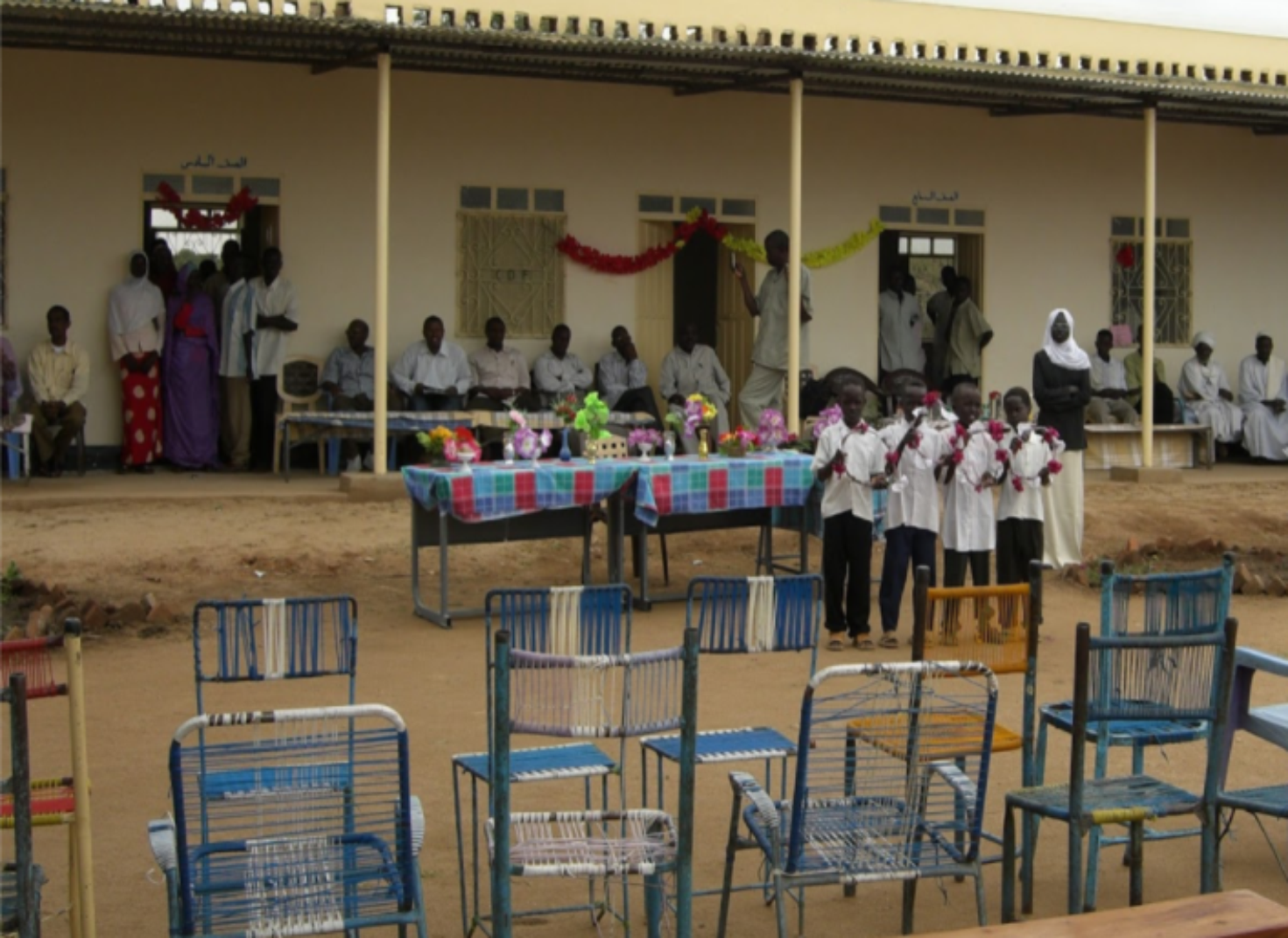
Schools, a health centre, water
Schools were built where a hundred days earlier children had gathered under a straw roof with no walls, sitting on rocks that served as benches. A health centre went up. A well system was rehabilitated. Communities supplied most of the materials themselves, and in one village women carried the equivalent of thirteen barrels of water a day on their heads across fifty days to keep the contractor supplied.
Enrolment, drop-out, malaria
School enrolment doubled on average across the communities. Female enrolment was a deliberate focus in several, set against local norms that made it hard-won. Drop-out rates halved in the two communities that targeted them. In one community, malaria incidence among pregnant women and young children fell from an expected fifty cases into single digits.
A land dispute settled, a water system reclaimed
In an eleven-tribe community in the Nuba mountains, the team carried one representative from every tribe, and used that to resolve a long-standing land dispute between two of them, so that every tribe contributed to the school. Increased school enrolment was the goal; peace between two tribes was the by-product.
In another community, a team representing all fourteen districts confronted a man who had charged water fees for fourteen years in the name of an NGO that had long since left the country. United for the first time, the districts could no longer be played against each other, and the team took their case to the Governor and the courts to negotiate a fairer share of water rights.
Persistence, in one detail
One brick-making team produced 21,000 mud bricks in a month, then judged that working harder would not be enough. They split the community into clusters, set each a target, and struck 50,000 bricks the following month, putting the construction back on schedule.

