
100 Days of Action.

A Lifetime of Change.

Across Africa, frontline teams take on the most pressing social and environmental problems to achieve tangible impact in 100 days.

A 100-Day Challenge brings together the people closest to a problem to set over-ambitious, time-bound goals and test new ideas and new ways of working together to achieve rapid results and lasting change.

The 100 days creates urgency, and that urgency, coupled with the overambitious goal, drives innovation. The model is used worldwide to shift complex systems. In South Africa, The World of Impact runs its programs across sectors where local action and sustained impact are most needed.

Impact Stories

Ending GBVF

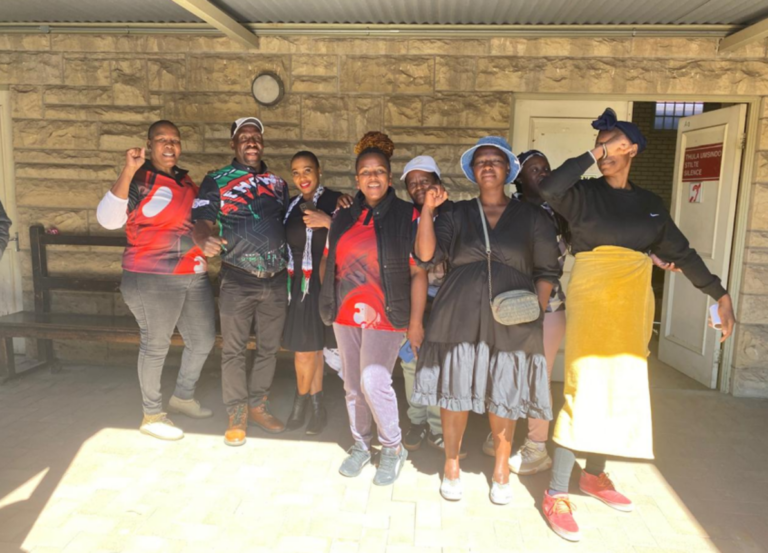
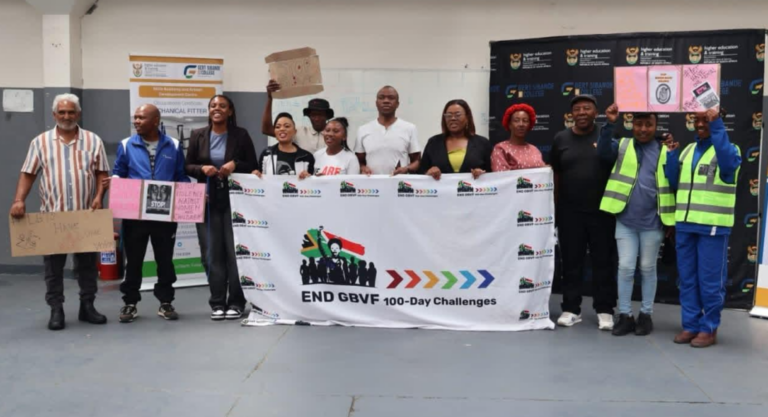
Drakenstein Municipality: a permanent GBVF hub, built in 100 days

A survivor in Drakenstein could know that help existed somewhere and still not know where the referral pathway started. The people most likely to notice early signs, ECD teachers who see children every day, had no training in what to do about it. Men were largely absent from the conversation. And a mother seeking counselling had nowhere to put her children while she did it.
Read More »
Ending GBVF

Gert Sibande District: monthly counselling reach lifted from 3 survivors to 18

A survivor who reports and receives no counselling is a survivor left to carry it alone. In Msukaligwa Municipality, the Department of Social Development was reaching three victims/survivors a month through counselling. The services existed. The Victim Empowerment Programme facilities and shelters were there. What was missing was the flow of people into them, which depends entirely on whether anyone in the community knows the services exist and how to reach them.

Read More »

Programmes

Every day, in an office or a team somewhere, a good plan gets stuck. Strategies set the direction, but the change lags where it is needed most: on the ground. The 100-Day Challenge closes that gap. It brings the people closest to a problem into one room, sets one ambitious goal, and gives them 100 days to deliver a real result. 

Ten programmes, 100 days for tangible impact. Select a sector to find out how the 100-Day Challenge model can move the needle.

Ending GBVF (flagship)

Delivering survivor impact across courts, municipalities and campuses. This is where the National Strategic Plan on GBVF is actually felt by survivors. 

Local Service Delivery

Turning the most urgent gaps between what municipalities plan and what communities experience into a 100-day commitment with a verified result. This is where Back-to-Basics becomes real – from revenue recovery and housing rights to roads, waste, and beyond.

Environment

Local teams are driving practical environmental solutions by restoring ecosystems, improving water access, and turning waste into opportunity. From conservation and reforestation to water security and circular economy initiatives, these Challenges deliver rapid, measurable results that bring national environmental goals to life.

Community Development

Local teams are creating stronger, more resilient communities by tackling unemployment, improving education, expanding food security, and advancing a just energy transition. Through rapid, collaborative action, these Challenges deliver practical solutions that create jobs, strengthen skills, improve access to nutritious food, and build sustainable local economies.

Justice

A court team, with the presiding officer, prosecutor, clerk, court manager, interpreter and investigator at one table, takes on one ambitious local goal and clears the delay in 100 days, with no new law, no new court and no new budget.

Private Sector

Accelerate the implementation of business and turnaround strategies, Operational improvement,  asset optimisation and new technology roll-out.

Get Started

 Apply now to organise a 100-Day Challenge in your sector and locality. Space is limited for 2027. 

The short introduction gives a good overview of the 100-Day Challenge approach and methodology

Reflections on Personal Experiences

Justice Sector

Watch the video in which the Chief Prosecutor for the Polokwane Cluster, Octavia, shares how the experience has influenced her way of working. You can also watch the full video on the impact created by the teams. Click here >>.

Private Sector

Mia Gous, the Managing Director of Newmont in Australia, shares her experience with 100-Day Challenges (used to be called Rapid Results) and what it meant for her personal leadership journey and career development.

100 Days of Action. A Lifetime of Change.

This information is confidential and proprietary to The World of Impact (Pty) Ltd. © 2026 The World of Impact (Pty) Ltd. All rights reserved. Trademarks are owned by or licensed to The World of Impact (Pty) Ltd. Read our full disclaimer and privacy policy.

Thought starter reflection questions

Jot down thoughts on these questions – to the extent they are relevant to your experience at the session:
  • When did the mood in the event shift from “why are we here?” to “this could be interesting – I am excited to be part of this.” What triggered this shift? 
  • When did you have to go “off script” on the agenda or to change the agenda? What triggered this? What did you adjust? How did it go?
  • What was most surprising to you at the event?
  • What new insights did you gain about the issue at hand, and about the way leaders in the system interacted with each other?
  • Where did the conversation get stuck? What got it unstuck?
  • How would you characterise the level of trust among participants in the meeting? To what extent did this shift as the meeting progressed? To what do you attribute this shift, if indeed it happened?

Thought starter...

Reflection Questions 

Jot down thoughts on these questions – to the extent they are relevant to your experience at the session:

  • When did the mood in the event shift from “why are we here?” to “this could be interesting – I am excited to be part of this.” What triggered this shift? 
  • When did you have to go “off script” on the agenda or to change the agenda? What triggered this? What did you adjust? How did it go?
  • What was most surprising to you at the event?
  • What new insights did you gain about the issue at hand, and about the way leaders in the system interacted with each other?
  • Where did the conversation get stuck? What got it unstuck?
These are 100-Day Challenge Mentors. 

They did some work before you received the Challenge Note. This included:

  • Writing the Challenge Note, and making sure that the leaders of all the organisations represented on the team are comfortable with it – and committed to supporting the work of the team
  • Helping the leaders of these organisation recruit you and your colleagues to the team
  • Gathering some baseline data and other information that will help you and your teammates set your 100-Day goal and develop your plan.
  • Making sure all the preparations are made for a successful Lift-Off workshop, when you and your teammates will meet and get your 100-Day Challenge started. This includes venue, facilitation support, food, swags, comms, travel arrangements and whatever else is needed.


Mentors will participate in all or part of the Lift-Off Workshop, mostly at the start to provide context and answer questions, and at the end to give you and your teammates feedback about the goal and plan you develop.

During the 100 days following the Lift-Off Workshop, here’s what the Mentors will do:  

  • They will check in every two weeks with the team leaders to see how the team is doing and what support they and the team need.
  • They will keep other organisational leaders informed and engaged during the 100 days, and pull them in to help as needed.
  • They will participate in the last part of the Refuelling Workshop, halfway through the 100 days, to see what additional support the team needs, and to begin to plan with the team for sustainability and scale-up.
  • They will work with the team at the Sustainability Workshop to finalise recommendations on sustaining the results and building on the work of the team.