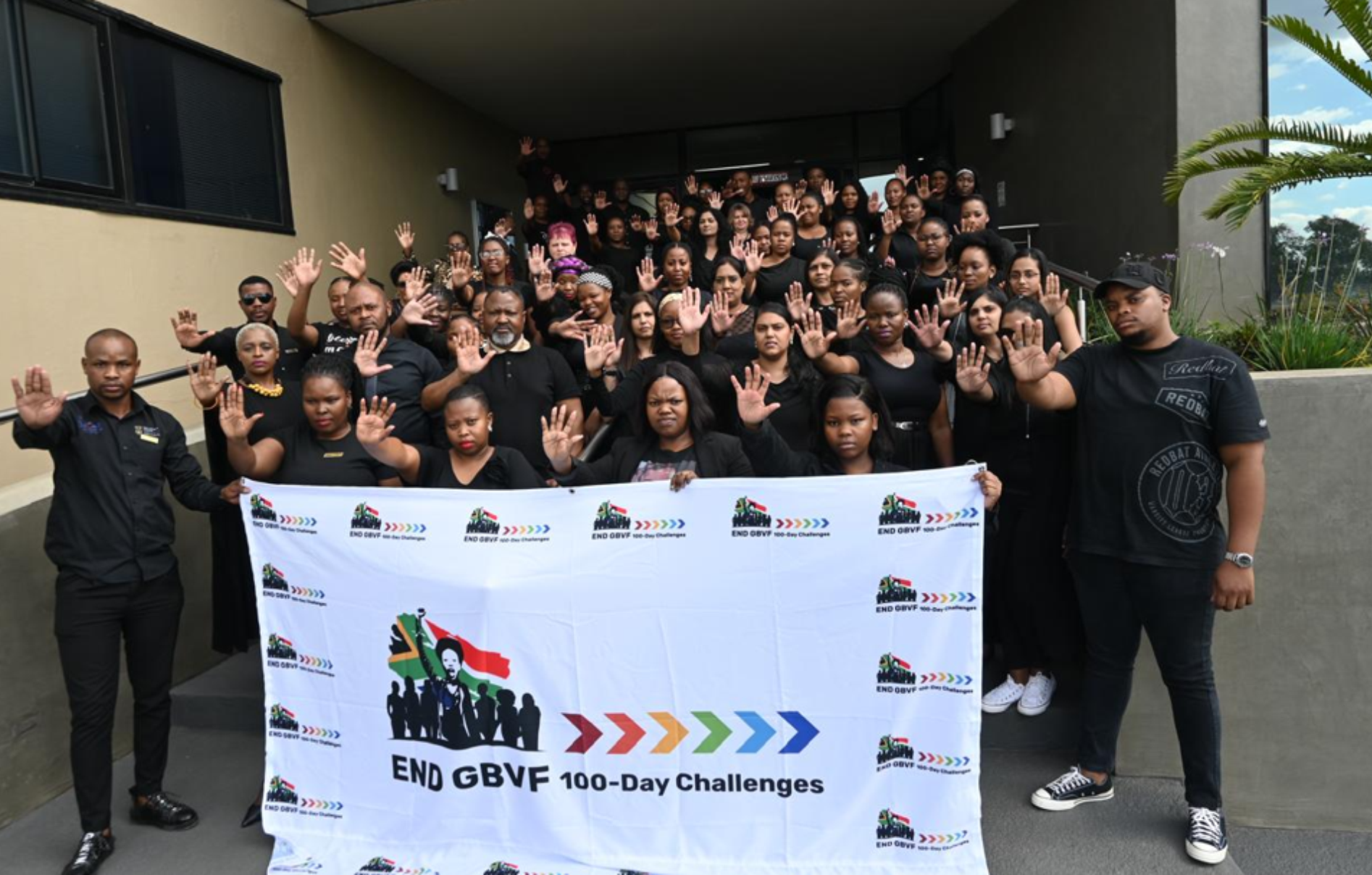
The 100-Day goal
Make reporting safe enough that people use it, and build the support pathway waiting on the other side.
The results
Twenty-three GBVF reports were formally recorded, and every one received intervention and follow-up. That second half is what makes the first half repeatable.
Dialogues and events, including Isibaya samadoda and Ikhosomba labesifazane, reached over 4,000 students and staff.
Capacity building trained 127 peer educators and 52 staff members in prevention, survivor support and referral systems.
Who did the work
A cross-departmental team spanning HR, Student Support Services and the SRC, with leadership backing that the team names as a condition of their performance rather than a courtesy.
How they did it
The QR code was the small thing that changed the numbers. Anonymous reporting through a code removed the moment a student most dreads: standing in an office asking to speak to someone. GBVF awareness also went into the Student Orientation Programme, so every incoming student now learns the reporting route before they need it.
Alongside that, the college built the receiving end. Formal partnerships with the SAPS Family Violence Unit, the Thuthuzela Care Centre and the Department of Social Development are what allowed all 23 reports to be referred and followed through rather than logged.
Men’s Roundtable discussions, formalised as the Majuba Men’s Pledge Campaign, put accountability and positive masculinity into a space men had voluntarily entered. A GBVF March and memorandum handover to SAPS, Black Mondays and campus prayer sessions made the work visible on campus every week rather than once.
Stigma, thin psychosocial resources, departmental budget limits and internal resistance were all live throughout.
What continues
Campus targets now run past the sprint: ITB and NTC aim to move from four or five reported cases a year to at least twelve to fifteen. The Campus Wellbeing Ambassadors programme, quarterly awareness and reflection sessions, and prevention education extending into student accommodation and surrounding communities all continue.
Kareshma Sewsancaran’s reflection: the challenge reminded the college that silence is complicity, and voices once quiet have become catalysts for change.