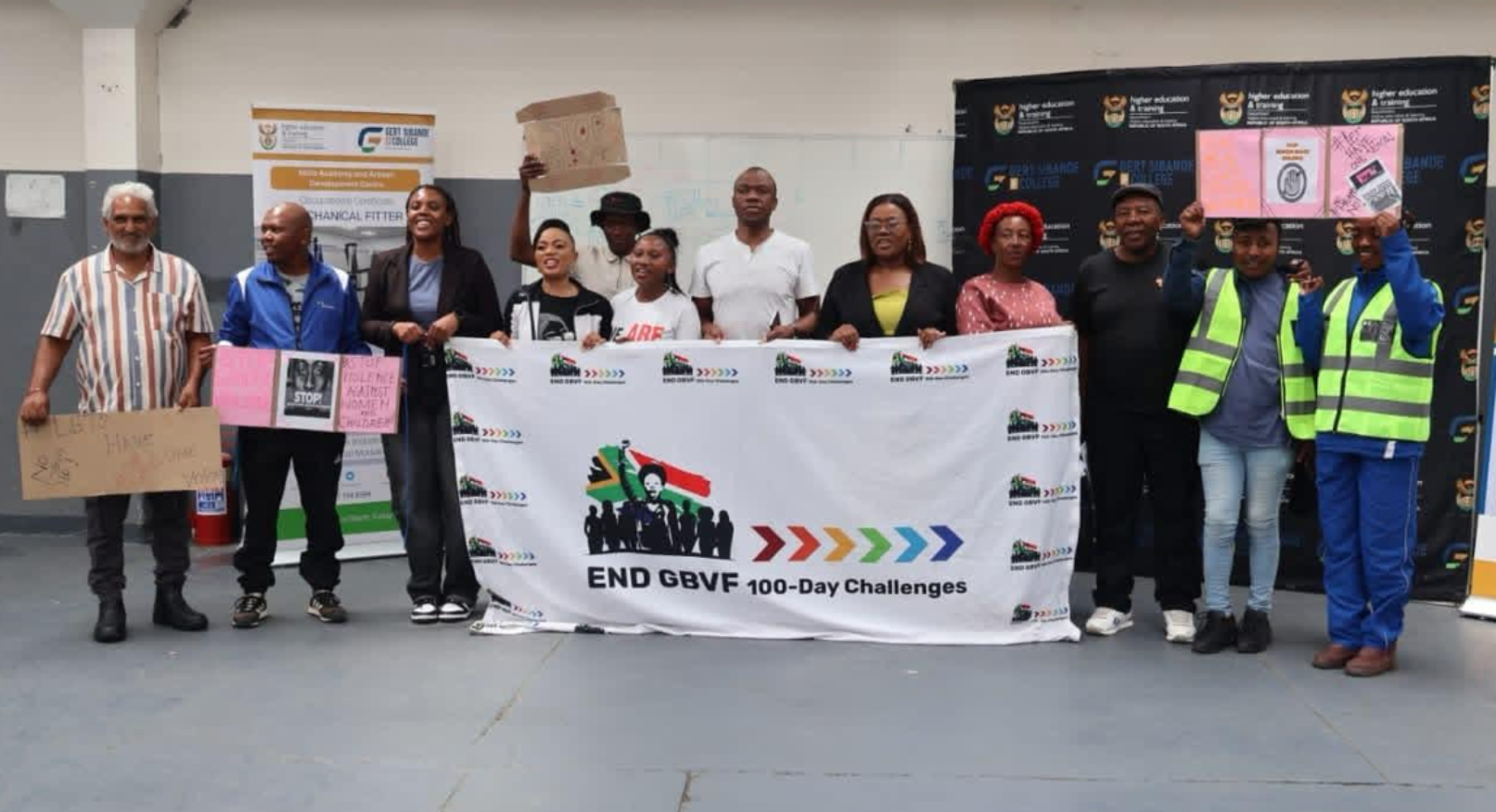
Gert Sibande TVET College: how they achieved 27% rise in GBVF reporting
Chris
Gert Sibande TVET College runs across five campuses in communities that do not share the same problem. What stops a student reporting in Evander is not what drives new HIV infections in Perdekop. A single college-wide GBVF programme would have been designed for none of them. The college let each campus name its own problem instead.
The 100-Day goals
Evander went after bullying as the gateway issue and the referral systems behind it. Balfour built a GBVF Community Task Team with SAPS, social services, the municipality and faith-based organisations, aiming at rapid response. Perdekop took a public health lens, linking intimate partner violence to HIV, TB and sexual health. Ermelo pushed prevention education into schools, workplaces and correctional facilities. Skills Academy ran GBVF and child protection awareness across six schools.
The Results
Collective reach across the five campuses came to nearly 8,000 people: learners, educators, students, inmates and community members.
Skills Academy recorded a 27% increase in GBVF case reporting in schools and TVET settings, alongside a drop in case withdrawals. Rising reports with falling withdrawals is the signal that matters. It means people are coming forward and then staying with the process.
Perdekop engaged more than 400 participants. Ermelo reached over 500 through awareness dialogues. Evander drew 239 participants. Balfour engaged 448 and introduced a rapid response protocol.
Who did the work
Campus teams working with SAPS, DSD, Health, Higher Health, the Department of Justice, Thuthuzela Care Centres, clinics, traditional leaders, faith-based organisations and local municipalities.
How they did it
Formal awareness sessions drew poor attendance almost everywhere. Evander abandoned them and moved to informal peer discussions during break times, which is where students actually talk. Ermelo dealt with stakeholders who came and went by tightening coordination. Perdekop met stigma and disclosure fatigue. Balfour found two departments running the same programme and folded them into one structure.
The teams reached people through classroom visits, social media, pickets, dialogues and joint community events rather than through one channel.
What continues
Balfour’s GBVF activities are being written into the municipal IDP and annual budgets, which is the strongest form of institutionalisation on this list. Ermelo’s network of government, civil society and traditional authorities remains active. Evander’s partnerships have matured into working referral systems. Perdekop delivers combined HIV, TB and GBVF campaigns through local clinics. Skills Academy has committed to long-term data collection.
Share the Post:
Thought starter reflection questions
Jot down thoughts on these questions – to the extent they are relevant to your experience at the session:
When did the mood in the event shift from “why are we here?” to “this could be interesting – I am excited to be part of this.” What triggered this shift?
When did you have to go “off script” on the agenda or to change the agenda? What triggered this? What did you adjust? How did it go?
What was most surprising to you at the event?
What new insights did you gain about the issue at hand, and about the way leaders in the system interacted with each other?
Where did the conversation get stuck? What got it unstuck?
How would you characterise the level of trust among participants in the meeting? To what extent did this shift as the meeting progressed? To what do you attribute this shift, if indeed it happened?
Thought starter...
Reflection Questions
Jot down thoughts on these questions – to the extent they are relevant to your experience at the session:
When did the mood in the event shift from “why are we here?” to “this could be interesting – I am excited to be part of this.” What triggered this shift?
When did you have to go “off script” on the agenda or to change the agenda? What triggered this? What did you adjust? How did it go?
What was most surprising to you at the event?
What new insights did you gain about the issue at hand, and about the way leaders in the system interacted with each other?
Where did the conversation get stuck? What got it unstuck?
These are 100-Day Challenge Mentors.
They did some work before you received the Challenge Note. This included:
Writing the Challenge Note, and making sure that the leaders of all the organisations represented on the team are comfortable with it – and committed to supporting the work of the team
Helping the leaders of these organisation recruit you and your colleagues to the team
Gathering some baseline data and other information that will help you and your teammates set your 100-Day goal and develop your plan.
Making sure all the preparations are made for a successful Lift-Off workshop, when you and your teammates will meet and get your 100-Day Challenge started. This includes venue, facilitation support, food, swags, comms, travel arrangements and whatever else is needed.
Mentors will participate in all or part of the Lift-Off Workshop, mostly at the start to provide context and answer questions, and at the end to give you and your teammates feedback about the goal and plan you develop.
During the 100 days following the Lift-Off Workshop, here’s what the Mentors will do:
They will check in every two weeks with the team leaders to see how the team is doing and what support they and the team need.
They will keep other organisational leaders informed and engaged during the 100 days, and pull them in to help as needed.
They will participate in the last part of the Refuelling Workshop, halfway through the 100 days, to see what additional support the team needs, and to begin to plan with the team for sustainability and scale-up.
They will work with the team at the Sustainability Workshop to finalise recommendations on sustaining the results and building on the work of the team.