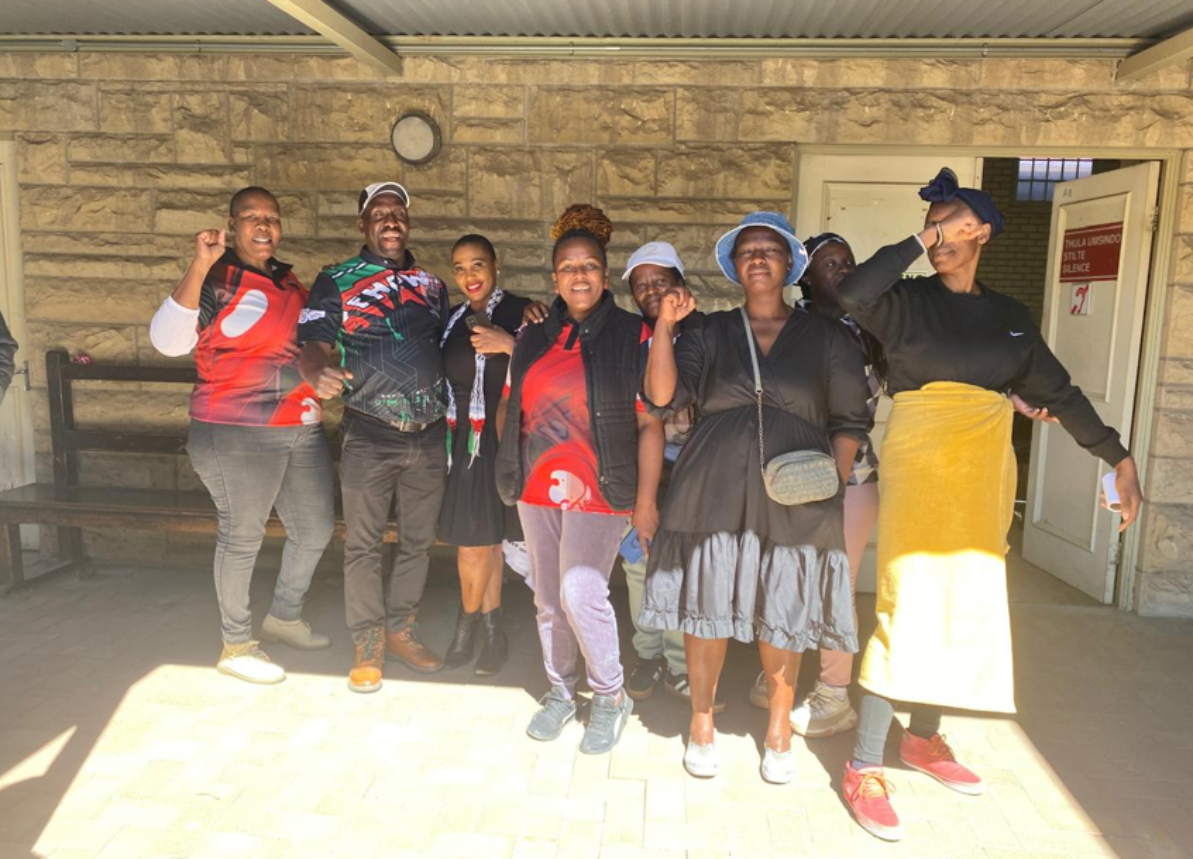
Gert Sibande District: monthly counselling reach lifted from 3 survivors to 18

A survivor who reports and receives no counselling is a survivor left to carry it alone. In Msukaligwa Municipality, the Department of Social Development was reaching three victims/survivors a month through counselling. The services existed. The Victim Empowerment Programme facilities and shelters were there. What was missing was the flow of people into them, which depends entirely on whether anyone in the community knows the services exist and how to reach them.


The 100-Day goal

Raise the number of victims/survivors receiving counselling in Msukaligwa Municipality from three a month to fifteen, working across Pillar 4 and Pillar 2 of the NSP-GBVF.

The results

The team reached eighteen a month in Msukaligwa, above the target they set.

District-wide, counselling reach rose from 80 victims/survivors in the first quarter to 181 in the second, delivered through VEP facilities and shelters.

Awareness campaigns reached 680 people in Msukaligwa. Across the district the second-quarter figure was 7,393 people, up from 3,634 in the first.

Who did the work

The district DSD team, led by VEP Coordinator N.C Khumalo, working with fifteen stakeholders including the Department of Justice, SAPS, the Department of Health and the Tribal Council.

How they did it

The team went to where people already gather rather than waiting at the service point. Campaigns were run with educators, learners, inmates, Women Manyano and the general community, and the message was kept practical: what GBVF is, how to prevent it, how to access services, why healing matters.

Fifteen stakeholders is a large table to hold together, and the team’s own conclusion was blunt: a well-collaborated programme delivers change and enhanced results. The Tribal Council’s presence matters here, because in this district a referral pathway that traditional leadership does not recognise is a pathway most people will not use.

Private sector support arrived without being budgeted for. Msobo Coal Mine donated sanitary pads and AVBOB provided a library to learners.

What continues

The team found the challenge worked as an evaluation tool as much as an implementation one, showing which existing services could carry more volume. They are continuing towards quality, integrated services, with the stakeholder network and the private sector relationships now in place rather than needing to be built.

Share the Post:

Thought starter reflection questions

Jot down thoughts on these questions – to the extent they are relevant to your experience at the session:
  • When did the mood in the event shift from “why are we here?” to “this could be interesting – I am excited to be part of this.” What triggered this shift? 
  • When did you have to go “off script” on the agenda or to change the agenda? What triggered this? What did you adjust? How did it go?
  • What was most surprising to you at the event?
  • What new insights did you gain about the issue at hand, and about the way leaders in the system interacted with each other?
  • Where did the conversation get stuck? What got it unstuck?
  • How would you characterise the level of trust among participants in the meeting? To what extent did this shift as the meeting progressed? To what do you attribute this shift, if indeed it happened?

Thought starter...

Reflection Questions 

Jot down thoughts on these questions – to the extent they are relevant to your experience at the session:

  • When did the mood in the event shift from “why are we here?” to “this could be interesting – I am excited to be part of this.” What triggered this shift? 
  • When did you have to go “off script” on the agenda or to change the agenda? What triggered this? What did you adjust? How did it go?
  • What was most surprising to you at the event?
  • What new insights did you gain about the issue at hand, and about the way leaders in the system interacted with each other?
  • Where did the conversation get stuck? What got it unstuck?
These are 100-Day Challenge Mentors. 

They did some work before you received the Challenge Note. This included:

  • Writing the Challenge Note, and making sure that the leaders of all the organisations represented on the team are comfortable with it – and committed to supporting the work of the team
  • Helping the leaders of these organisation recruit you and your colleagues to the team
  • Gathering some baseline data and other information that will help you and your teammates set your 100-Day goal and develop your plan.
  • Making sure all the preparations are made for a successful Lift-Off workshop, when you and your teammates will meet and get your 100-Day Challenge started. This includes venue, facilitation support, food, swags, comms, travel arrangements and whatever else is needed.


Mentors will participate in all or part of the Lift-Off Workshop, mostly at the start to provide context and answer questions, and at the end to give you and your teammates feedback about the goal and plan you develop.

During the 100 days following the Lift-Off Workshop, here’s what the Mentors will do:  

  • They will check in every two weeks with the team leaders to see how the team is doing and what support they and the team need.
  • They will keep other organisational leaders informed and engaged during the 100 days, and pull them in to help as needed.
  • They will participate in the last part of the Refuelling Workshop, halfway through the 100 days, to see what additional support the team needs, and to begin to plan with the team for sustainability and scale-up.
  • They will work with the team at the Sustainability Workshop to finalise recommendations on sustaining the results and building on the work of the team.