
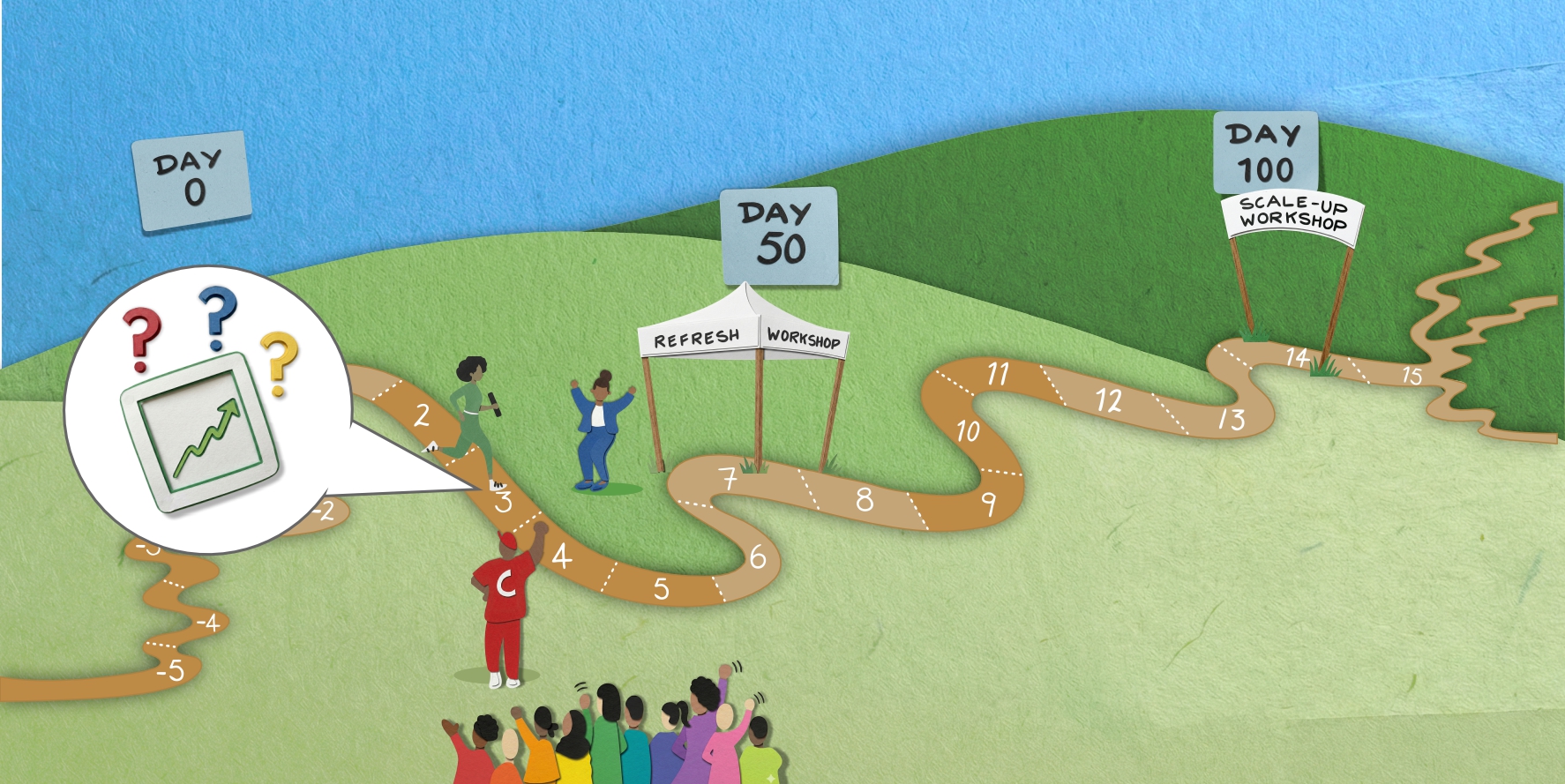
Week 3 – Sorting out data issues

Week 3

Sorting out Data Issues to Measure Impact

In social impact work, particularly within complex systems like the Gender-Based Violence and Femicide, data is more than just numbers; it is the evidence of lives changed. This week, your mission is to ensure the Team moves beyond “doing work” to “proving results”.

Data is often the hurdle that 100-Day Teams stumble over. As a Coach, you aren’t expected to be a statistician, but you must be the “Data Champion” who ensures the Team’s efforts are visible and measurable.

Podcast

Click here to listen to two Coaches discussing the mission and tasks this week – with great tips!

Your Task This Week

Your primary task this week is to organise a focused data discussion with the Team Leader and the Team’s designated “data geek”. The aim is to sharpen the following four areas:

100-Day Goal Clarity

While the goal was set during the Start-Up Workshop, the reality of the first two weeks often reveals “fuzziness”.  You could ask: “If we had to present our results to the Presidency tomorrow, which single number would tell the most powerful story?” This helps them move from “gathering data” to “communicating impact.”

  • The Action: Ensure the goal is stated so clearly that a stranger could walk in on Day 100 and instantly tell if the team succeeded, surpassed, or fell short.

  • The “Why”: Without a binary “Yes/No” success criteria, teams in multi-organisational projects often lose focus and default to business-as-usual.

Baseline Data

You cannot celebrate a 20% improvement if you don’t know where you started.

  • The Action: Confirm the team has gathered “the before picture”—the performance metrics as they existed the day before the challenge began.

  • The “Why”: For teams, baseline data is essential for “bragging rights” and proving to stakeholders that the 100-Day Challenges and doing things differently actually catalysed change.

Real Time Tracking
(The Pulse)

Waiting until Day 100 to check results is a recipe for failure. 

  • The Action: Establish a way to track interim results weekly—or even daily—and display this on a visible data chart for all stakeholders to see. 

  • The “Why”: Rapid innovation requires a fast feedback loop. If an intervention isn’t working by Week 4, the team needs to know immediately so they can pivot.

A Tip:  When guiding the team to create their data charts, encourage them to use consistent visual cues to make the data “speak” to leaders:

  • Progress and Wins: Use Greens to highlight goals met.
  • Alerts and Obstacles: Use Reds to signal where data is lagging or adverse effects are detected.
  • Baselines and Context: Use Neutral Greys or Blues for the “before” data to keep the focus on the current improvement.
Pre-empting
Adverse Effects

In community-level projects, critics often worry that “speed” comes at the expense of “quality” or other priorities.

  • The Action: Anticipate potential negative consequences—such as resources being diverted from other essential services—and track “counter-indicators” to ensure they remain stable.

  • The “Why”: In sensitive sectors like GBVF response, “doing no harm” is as important as making progress. Tracking adverse effects protects the team’s reputation and ensures long-term sustainability.

For examples on each of the four areas, and for some tips on how to guide the Team in these discussions, please go over the Learning Deep Dive: Data Issues in 100-Day Challenges